
INFRASTRUCTURE (PPSL)
A Society Project that will make Haiti rich, powerful and independent.
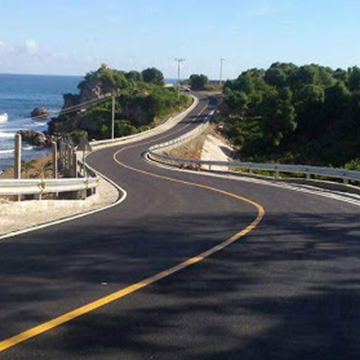
Excellent infrastructure from the rural section to the capital.
Haiti will have to create 10 semi-governmental entities
1- Private and public partnerships (PPP)
Will be trained and their mission will be to build and maintain the country's infrastructure, including urban and rural roads, bridges, bus stations, cabotage, ports, electrification, modern communication including internet / 4G, irrigation and waste treatment. The Public Works Department will oversee these PPPs and define operating procedures. These entities will be financed with $ 3 billion from public funds. The private sector or the international community will contribute the rest. A PPP will play a regulatory role and ensure that both interests are not harmed. We now receive $ 800 million in bilateral or multilateral support from the international world. All of this amount can be used to incubate PPPs.
2- The rebirth of rural and urban communities
A caring government will need to invest $ 3 million in each of the 572 rural sections, $ 5 million in each of the 146 municipalities, $ 15 million in each of the 10 largest cities in the province and $ 2.5 billion in the capital to revitalize these communities. .
In addition to the national construction budget, municipalities will have the opportunity to develop sidewalks, markets, public clinics, and sports centers, parks and recreation for young people,
thanks to the voluntary contribution of DIASPORA and Haitian citizens. The donation of 100 dollars for Mother's Day to Manmam Haiti,
May 30 of each year, will be requested to cover our estimate of $ 300 million per year. (See the Pote Kolé project for Haiti in the practical work appendix).
Affirmative Action for the Poor in Rural Areas and Slums
The government will have to take all necessary steps to achieve the national accord and thereby help the underprivileged to reach the middle class in the next 5 years. The wealth creation policy will be generalized and updated, that is to say that it will take into account the citizens as they are now and meet their needs. They should be enriched with the vectors mentioned above, that is to say, agriculture according to the environment and organic and nostalgic. Crafts and rural tourism will be revitalized through the expansion of infrastructure in Haiti. With a framework that takes into account each citizen and each family, we can achieve income
average of US $ 30,000 or 2.5 million gourdes per family per year, within five years.
The Economic Development Plan in all its scope.
This plan has three stages:
& nbsp & nbsp1) A nation to be organized by eradicating exclusion and inculcating the notion of solidarity with all.
& nbsp & nbsp2) A country to be built, from the rural section to the capital, with solid institutions and adequate infrastructure managed with an ethical sense, a spirit of service and a patriotic feeling.
3) A proud and prosperous nation that reaches out to its citizens living abroad as well as to the underprivileged of other nations, especially those of the Caribbean and Africa.
In terms of public infrastructure, Haiti's 572 rural villages have not received over the past 215 years
than a precariously functioning primary school.
The 146 communes, with dilapidated houses, devoid of concrete streets, sewers, drinking water, and electricity, and without vocational schools or economic support, are today lifeless sites. It is therefore not surprising that the villagers simply wish to leave their homes to seek refuge in the cities or to undertake a clandestine journey.
in the Dominican Republic, the Bahamas, the Turkish Islands or Florida, and now in Brazil and Chile.
The thirteen major cities, namely Pétion-ville, Petit-Goâve, Jacmel, Les Cayes, Jérémie, Hinche, Saint-Marc, Gonaïves, Miragoâne, Port de Paix, Cap-Haitien, Fort Liberté, Ouanaminthe and the capital, have become slums giants where the rural masses come to settle haphazardly, without respecting the environmental protection zones, thus compromising modern urban development,
organized according to the standards established in all major cities of the world.
The capital, completely destroyed by the earthquake of January 12, 2010, will have to be rebuilt
district by district like a modern metropolis.
It is necessary to start from the base, that is to say from the organized development of the 572 rural villages. We propose an investment of 3 million US dollars per year for 5 years in the rural sections
for the realization of economic and social development projects.
This part of the development will cost $ 1,170 billion. It will report to a new Ministry, that of the Ministry of Rural Development, which will be in charge of this basic enterprise. This will make it possible to organize urban development while rooting
the peasant in an environment where he can thrive.
Then the urbanization of the 146 municipalities will begin according to the development indices found in all the modern cities of the world:
concrete streets, sewers, primary, secondary and vocational schools.
The reconstruction of Haiti is not only the business of the city of Port-au-Prince, which was destroyed by the earthquake. This construction must begin
in each rural section until it reaches the capital.