
CHOICE OF CANDIDATES? (PPSL)
« I have spent sleepless nights giving you this piece of land, take good care of it so that it remains a national heritage forever ».

The internal procedure of a political party which governs the selection of candidates for each elected office is directly linked to the concept of representation. The constitutional role of the parties obliges them to observe internal democratic rules which are more demanding than the rules which govern social associations or private companies. The objective is to ensure the democratic character of the party without prejudice to the powers or the charisma of the leaders which inevitably take on importance. Depending on the circumstances
historical and political aspects of a country, these requirements can be met by various means.
One of the procedures to limit the undue influence of party leaders is to choose candidates through internal elections limited to members of each local party association or open to all citizens registered as party supporters, to the like the concept of primary elections. The two procedures are markedly different. The democratic election within the party has the advantage of imparting a certain degree of transparency and of initiating a free discussion about the candidates. This is an assurance of internal democratic participation which in reality only targets the active members of the party, the choice of candidates remaining in the hands of the party itself. The primary election procedure offers the advantage of greater
participation in the process of all supporters who have registered with the party for this purpose.
In countries where the choice of candidates continues to be exclusively the internal responsibility of parties, the population seems to favor the primary election procedure, but party leaders do not react very quickly to this preference. It should also be considered that, when it comes to elections that do not take place at the local level, primary elections are very expensive and, far from opening up access to potential candidates,
instead, impose an additional burden on them in terms of money, time and logistics.
WHAT ARE THE QUALITIES OF A GOOD CANDIDATE? (PPSL)
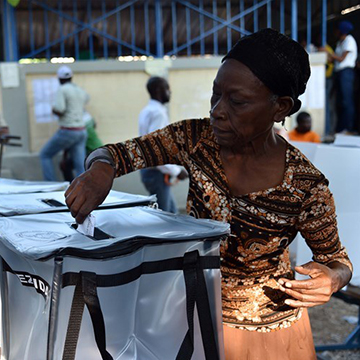
• For electoral victory, in my opinion a simple recipe: 1) Charisma 2) Credibility 3) Diplomacy.
• A good candidate is a charismatic personality, someone able to rally voters from all walks of life around his party's ideas and show that they are personally important to him.
• Honesty. This is one of the two essential qualities. We can put it another way, speaking of "courage to speak the truth". Candidates must stop making untenable promises over and over again, knowing full well that they are unrealistic.
Skill. This is the other essential quality. The candidate must show that he understands the consequences of his proposals and that he will be able to implement them.
Ability to bring together, to generate support for one's project across traditional divisions. This presupposes a certain oratorical talent, in the positive sense. Indeed, this talent should not be used to disguise the poverty of a project.
• For me a good candidate is a man / a woman who masters the files, has experience (has already held mandates ...), is considered as someone serious in Haiti and abroad, a candidate which makes promises and a clear program, without contradictions, and which it will keep.
• Honesty, Ambition, Courage.
• Pragmatism, courage, avant-garde.
• Visionary, honest, radical.
• A good candidate must gather in his camp to avoid the breakthrough of extremes, be open in terms of changing mores, not pose as a providential man but rather as a technician and have concern for the environment.
• A good candidate sells his project well, in a credible way, without attacking that of others (he leaves this job to his relatives!). But a good candidate for the French presidential election must be even more, to create this famous link between a man and the nation: to show himself while keeping height, to give depth to his personality, to create a position of his own. in the French political landscape, a unique relationship. The good candidate is the one who achieves the feat of bringing together contradictory qualities: proximity to voters and high stature,
bring Haitians together and propose a clear course, necessarily divisive
• A good candidate must have a consistent, coherent political project, must announce concrete measures, and in my opinion progressive.
A good candidate cannot be xenophobic and incite discrimination.
In his campaign, he must not resort to jargon or operate an overly blatant electoral strategy. The proposed measures must have a meaning: they must not be a pretext having for only end the seduction of a particular electorate.
• Charisma, the ability to command attention, endurance, pragmatism and a hint of achievement, "flair".
• I see someone who is irreproachable, pedagogue and pragmatic. Someone who does not hide the disastrous state of the economic and financial situation from Haitians and who will have the courage to go all the way to allow the young people of this country to have a future in Haiti.
• A good candidate should have the following qualities: He should be a man of reason, with a vision for Haiti's future and its place in the world. Failing to be a "man of the people" (none of the presidents of the 5th Republic was "an ordinary man", all came from a certain elite - and the coming campaign confirms this tendency), he must nevertheless to be among the Haitians, and to be aware of the reality of their daily life.
• A good candidate must gather in his camp to avoid the breakthrough of extremes, be open in terms of changing mores, not pose as a providential man but rather as a technician and have concern for the environment.
• At the communicational level: rhetorically unite the electorate; someone who has a vision and, in addition, who has experiences in several fields.
• That he has a real economic culture, an idea of the concrete reality of the field, of common sense. Three things that do not exist at the moment in the current candidates.
• The abilities to convince, to rally and to train are essential to form the basis of political action. They are broken down into sub-categories: mastery of media and social networks, understandable program, team, goal setting and especially methods. The methodological aspect is a priority. A goal without a method to reach it is demagoguery.
• Honesty, competence, credibility, charisma, apply the concept of social justice.